
A Note on Bernays’ Views on Propaganda
What are the ethics of propaganda? Is there an ethical propaganda? Let us see what the most prominent propagandist has to say in defense of of propaganda.

Bernays, a renowned and revered name in the field of public relations, looks at propaganda with a cool, masculine rationality. For him, propaganda is not only good, but also necessary. He argues for the necessity of propaganda for organising as well as governing. He argues that it can serve education, social service and “art and science.” He writes that, without propaganda, an average person, in the modern world – which, for Bernays, was the 1920s - would be flooded with information and the consequent choices. History Today called him “the original influencer.”
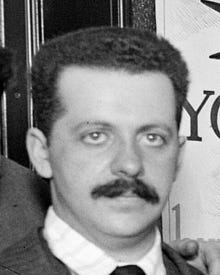
The complexities can only be deviously augmented a century from then. For propaganda to anyhow aid in decision making, it must supply the truth, or simply a fact. But is a propagandist also a seeker of truth? No. What is supplied to the audience is not a truth, but a bias or opinion. Such assistance might be helpful in decision making, but the consequences might not necessarily be positive, or in some cases, might just be disastrous.
Bernays holds very different views of political propaganda and corporate propaganda. In his time, he found the political efforts at propaganda bleak. He wrote that while business had learned everything there was to be learnt from politics, politics, the “first big American business”, had failed to learn from business the “methods of mass distribution of ideas and products.” (Bernays 72) Bernays finds it “incomprehensible that politicians do not make use of the elaborate business methods that the industry has built up.” (Bernays) It certainly stands true today that politics and business are no estranged brothers; consultancies and technologies serve politicians, as they do businessmen. Politics and business are not neatly cut halves, but are mushed in somewhat symbiotic relationships. This was true in twentieth century America as well. Bernays himself came to be employed by the United Fruit Company, for which the Eisenhower administration toppled a democratically elected government in Guatemala, in the 1950s. He led the campaign to brand Jacobo Árbenz - a leader planning agrarian reforms that would have returned land from the companies to the people - as a communist threat for the North American public.
In his 1929 book, Propaganda, Bernays writes, “..today, because ideas can be instantaneously transmitted to any distance and to any number of people, this geographical integration has been supplemented by many other kinds of grouping, so that persons having the same ideas and interests may be associated and regimented for common action.” (Bernays 21) In his memoir, Biography of an Idea: Memoirs of a Public Relations Counsel, he wrote, “The cure for propaganda is more propaganda.” (Bernays 384) But this is assuming that all propaganda has equal force, planning and resources behind it. Is propaganda to unionise labour equivalent to that for selling shampoo, or affecting satisfaction with the government? Is all propaganda to build common action at par? Or are these different types of actions forcefully jammed into a single category?
The 1928 book might as well have been Bernays’ sales pitch to his potential clients. His work with the United Fruit company and large tobacco brands are testimony to his success. His work with these companies more harm than the Americans care to admit (read references below for details about UFC’s cruelty in the Central and South Americas and role in the 1954 Guatemalan Coup)
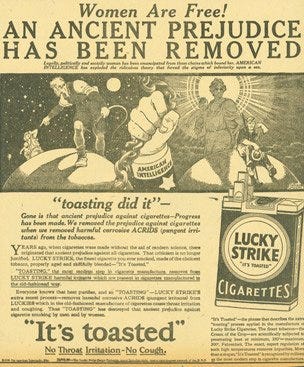
However, today, it can be read as a playbook for either moulding reality, or fighting misinformation crises, in capitalist democracies, per one’s political inclination.
Works Cited
Bernays, Edward. Biography of an Idea: Memoirs of a Public Relations Counsel. New York, Simon & Schuster, 1965.
Bernays, Edward L. Propaganda. Ig Publishing, 2004.
Mostegel, Iris. Edward Bernays: The Original Influencer, History Today, 2019.
Cabal, Mariana R. The Dark Side of Bananas: Imperialism, Non-State Actors, and Power, 2023